
If you’re looking for a reliable french toast recipe that turns out golden, cozy, and absolutely delicious every time, you’re in the right place. I love recipes like this because they feel a little special without asking much from you. With a few basic ingredients and a hot skillet, you can turn ordinary bread into a warm breakfast that tastes like a weekend treat.
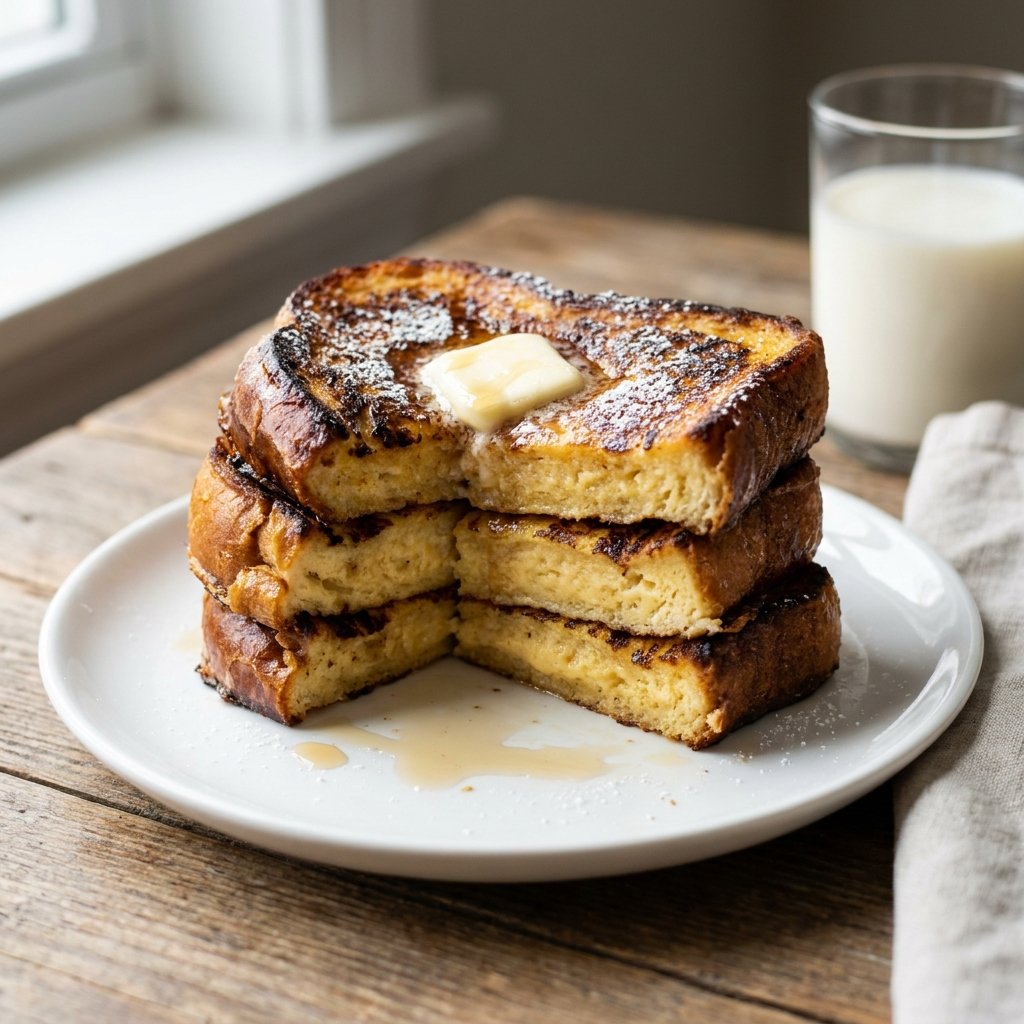
What I especially love about French toast is the contrast of textures. The outside gets beautifully browned with those lightly caramelized edges, while the inside stays soft and custardy. Topped with a little butter, a dusting of powdered sugar, and a drizzle of syrup, it’s simple in the best possible way.
This is the kind of breakfast I make when I want something comforting and familiar, whether it’s for a slow Sunday morning, a holiday brunch, or even breakfast-for-dinner. I’ll walk you through exactly how I make it so you can get that thick, stacked diner-style look and flavor right at home.
Quick Recipe Info Card
- Prep Time: 10 minutes
- Cook Time: 15 minutes
- Total Time: 25 minutes
- Servings: 4 servings
- Difficulty: Easy
Why You’ll Love It
- It uses simple pantry and fridge staples you likely already have.
- The slices cook up golden brown with crisp edges and tender centers.
- It works beautifully with thick-cut bread for that classic stacked presentation.
- You can keep the flavors classic or customize them with spices and toppings.
- It’s quick enough for a weekday breakfast but special enough for brunch guests.
- This recipe is easy to double if you’re feeding a crowd.
Nutritional Benefits and Adaptable Variations
- Protein boost: Eggs and milk add protein, which helps make breakfast more satisfying.
- Energy-giving carbs: Bread provides quick energy, especially helpful for busy mornings.
- Calcium: Milk contributes calcium and other important nutrients.
- Add fruit: Serve with fresh berries, sliced bananas, or stewed apples for extra fiber and natural sweetness.
- Use whole grain bread: For a heartier option, swap in thick-cut whole wheat or multigrain bread.
- Dairy-free option: Use unsweetened almond milk or oat milk and a dairy-free butter alternative.
- Flavor twist: Add a pinch of nutmeg, orange zest, or a splash of maple extract to the custard.
- Lower-sugar serving idea: Skip powdered sugar and top with fruit and a spoonful of plain yogurt instead.
Ingredients
- 8 slices thick-cut bread, such as brioche, Texas toast, or challah
- 4 large eggs
- 1 cup whole milk
- 2 tablespoons granulated sugar
- 1 teaspoon vanilla extract
- 1 teaspoon ground cinnamon
- 1/8 teaspoon salt
- 2 tablespoons unsalted butter, plus more as needed for the pan
- Powdered sugar, for serving
- Maple syrup, for serving
Step-by-Step Instructions
- Make the custard: In a wide shallow bowl or baking dish, whisk together the eggs, milk, sugar, vanilla extract, cinnamon, and salt until the mixture is smooth and well combined.
- Preheat the pan: Set a large nonstick skillet or griddle over medium heat. Add a little butter and let it melt, coating the surface lightly.
- Dip the bread: Place one or two slices of bread into the custard mixture and let them soak for a few seconds per side. You want the bread coated and lightly saturated, but not falling apart.
- Cook the first side: Transfer the soaked bread to the hot skillet. Cook for about 2 to 3 minutes, until the bottom is golden brown.
- Flip and finish cooking: Turn the slices carefully and cook for another 2 to 3 minutes, until the second side is browned and the center is set. Adjust the heat as needed so the outside browns without burning.
- Repeat in batches: Add more butter to the skillet as needed and continue with the remaining bread slices. If you’re making a larger batch, keep finished French toast warm in a low oven while the rest cooks.
- Serve: Stack the warm slices on plates and top with butter, powdered sugar, and maple syrup. Serve immediately for the best texture.
Tips, Serving Suggestions & Substitutions
- Use sturdy bread: Slightly stale bread is ideal because it absorbs the custard without becoming mushy.
- Thick slices are best: Thick-cut brioche, challah, or Texas toast gives you that plush center and crisp exterior.
- Don’t oversoak: A quick dip is enough for soft breads. Heartier breads can handle a little more time.
- Cook over medium heat: If the pan is too hot, the outside can brown before the center is fully cooked.
- Keep it warm: Place cooked slices on a baking sheet in a 200°F oven if you want to serve everyone at once.
- Topping ideas: Try fresh berries, sliced bananas, toasted pecans, whipped cream, or a spoonful of fruit compote.
- Substitute the milk: Half-and-half makes it richer, while oat milk or almond milk works well for a dairy-free version.
- Add spice: A small pinch of nutmeg or cardamom adds lovely warmth.
- For extra sweetness: Use a touch of brown sugar in the custard for deeper flavor.
Nutrition Information
| Nutrition | Per Serving |
|---|---|
| Calories | 320 |
| Carbohydrates | 34 g |
| Protein | 11 g |
| Fat | 15 g |
| Saturated Fat | 7 g |
| Cholesterol | 200 mg |
| Sodium | 360 mg |
| Fiber | 2 g |
| Sugar | 8 g |
Nutrition values are approximate estimates per serving and can vary based on the bread, milk, butter, and toppings you use.
Storage & Make-Ahead Tips
If you have leftovers, let the French toast cool completely before storing. Place slices in an airtight container and refrigerate for up to 3 days. Reheat in a skillet over low heat, in a toaster oven, or in a 350°F oven until heated through.
For longer storage, freeze the cooled slices in a single layer first, then transfer them to a freezer-safe bag or container with parchment between layers. They’ll keep well for up to 2 months. Reheat straight from frozen in the oven or toaster oven until hot in the center.
If you want to get ahead, you can whisk the custard mixture the night before and refrigerate it in a covered container. Give it a quick whisk before using. For food safety, don’t reuse custard that has had raw bread dipping in it unless it is fully cooked right away.
FAQ
1. What bread is best for French toast?
I recommend thick-cut brioche, challah, or Texas toast. They soak up the custard nicely and hold their shape well during cooking.
2. Why is my French toast soggy in the middle?
This usually happens if the bread is too thin, too fresh, soaked too long, or cooked over heat that is too high. Use thicker bread, dip briefly, and cook over medium heat so the center has time to set.
3. Can I make this French toast recipe without cinnamon?
Absolutely. You can leave it out for a more classic vanilla flavor, or replace it with a pinch of nutmeg or cardamom if you want a different warm spice note.
4. Can I make French toast ahead for a crowd?
Yes. Cook the slices in batches and keep them warm on a baking sheet in a low oven. You can also make them earlier in the day and reheat in the oven just before serving.
5. How do I know when French toast is fully cooked?
The outside should be golden brown and the center should feel lightly springy rather than wet. If you’re unsure, lower the heat slightly and give each side another minute so the custard cooks through.
Final Thoughts
This French toast recipe is one of those dependable favorites I come back to again and again. It’s cozy, easy, and always feels a little bit special, especially when served warm with butter, powdered sugar, and maple syrup. Whether you’re making breakfast for yourself or a full table of hungry people, this recipe delivers that golden-brown comfort every single time.
If you try it, I’d love to hear how it turned out for you. Leave a comment, share the recipe with someone who loves breakfast as much as you do, and don’t forget to save it to Pinterest for your next brunch or weekend breakfast plan.
French Toast Recipe
Ingredients
Equipment
Method
- Whisk together the eggs, milk, sugar, vanilla extract, cinnamon, and salt in a wide shallow bowl or baking dish until smooth and fully combined.
- Heat a large nonstick skillet or griddle over medium heat and add a little butter to coat the surface.
- Dip 1 to 2 slices of bread into the custard, soaking for a few seconds per side until coated but not soggy.
- Place the soaked bread on the hot skillet and cook for 2 to 3 minutes, until the first side is golden brown.
- Flip the slices and cook for 2 to 3 minutes more, until the second side is browned and the center is set.
- Repeat with the remaining bread, adding more butter to the skillet as needed between batches.
- Serve warm topped with butter, powdered sugar, and maple syrup.
